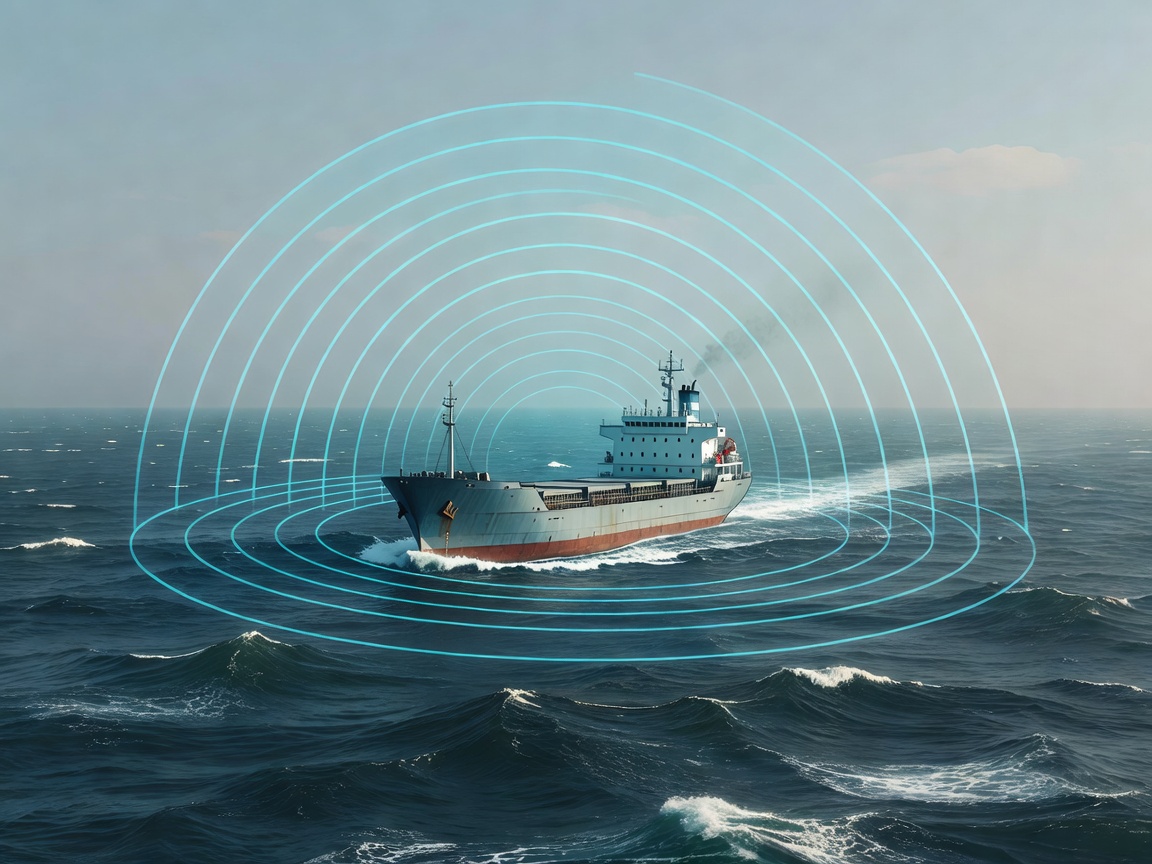
Obstacle-detection technology can help organize observations from a busy marine environment. Its useful role is to support a proper lookout and established bridge procedures—not to replace either one.
Detection is only the beginning
It helps to separate four ideas. Detection is noticing a return or visual feature that might correspond to an object. Identification is estimating what that object could be, such as a vessel or floating item. Motion estimation is working out how its position appears to change over time. Risk assessment considers whether that movement and the vessel’s own context deserve attention. Each step adds interpretation, and each can carry uncertainty.
Systems may draw on radar, cameras, AIS information and other equipment installed aboard a vessel. Radar can provide information about reflective targets and relative movement, depending on the equipment, settings and conditions. Cameras can contribute visible imagery and, where equipped, other image information. AIS can provide identity and reported navigation details for transmitting vessels, but it is not a complete picture of traffic: not every object transmits, information can be delayed or incorrect, and reception can vary. Other onboard sensors may provide useful context about own-ship movement or equipment state.
What different sources may contribute
| Source | Potential contribution | Considerations |
|---|---|---|
| Radar | Returns that can help locate targets and observe relative movement. | Sea clutter, rain, range, settings, occlusion and target characteristics affect interpretation. |
| Camera | Visual details that may help distinguish objects in view. | Visibility, lighting, spray, lens condition, line of sight and image quality matter. |
| AIS information | Reported identity and navigation details for transmitting vessels. | Not all objects transmit; reports may be missing, stale, mistaken or inconsistent. |
| Other vessel sensors | Own-ship motion or equipment context that can inform interpretation. | Capabilities and usefulness depend on installation, calibration and integration. |
Combining sources is often called sensor fusion: software tries to associate observations that may refer to the same thing and make a more coherent track. That can reduce dependence on a single source. It can also introduce difficult questions. Are two reports truly the same target? Is one source delayed? Does an apparent mismatch mean equipment trouble, unusual motion or simply incomplete information? A fused display should not hide those uncertainties behind a confident-looking symbol.
Why alerts need careful design
Conditions at sea can make detection difficult. Visibility can fall; waves and spray can complicate radar or camera interpretation; an object may be occluded or outside a sensor’s coverage. Range, installation, alignment, maintenance and configuration all affect what equipment can observe. Sensor data may arrive late, be inaccurate or disappear. A changing scene can make a previously plausible track less reliable.
Automated systems can raise false positives—alerts about something that doesn’t warrant attention—and miss detections that matter. Too many low-value alerts can create fatigue; an alert that hides its uncertainty can create misplaced confidence. Useful interfaces prioritize what may need review, show the source and freshness of information, distinguish an observation from an interpretation, and communicate why an alert appeared. No alert design makes the underlying uncertainty vanish.
Detection and alerting must support, not supplant, required lookout duties, bridge procedures and professional judgment. Personnel need to keep using suitable equipment and observation practices according to the vessel’s procedures and applicable requirements. A software cue is one input to that work, not an instruction or a guarantee that other hazards have been found.
How to evaluate a collision-awareness tool
Ask what the system can actually ingest on this vessel, how sensor coverage is represented, and whether installation or calibration affects performance. Find out how it handles conflicting inputs, data dropouts, uncertainty and changes in sensor status. Are alerts configurable without obscuring important warnings? Can users see the underlying observation and distinguish detected, identified and tracked objects? What does the tool do when it cannot make a reliable assessment?
Testing should include a range of representative conditions, not just clean demonstrations: poor visibility, sea clutter, occlusion, overlapping targets, missing AIS reports, delayed information and unusual target behavior. Review both false alerts and missed detections, and involve the bridge personnel who will use the display. Check integration with existing equipment, training needs, cyber protections, maintenance and software-update arrangements.
Automated awareness may reduce some repetitive monitoring and help bring multiple observations together. It may also add interface complexity, depend on equipment that is unavailable or misconfigured, and encourage overreliance if its boundaries aren’t clear. A sensible evaluation asks not “Does it detect everything?” but “What does it help with, under which conditions, and how will people recognize when it may be wrong?”
For a broader look at how information sources form a shared picture, read maritime situational awareness. For how alerts and suggestions fit a human-led workflow, see navigation decision support.
All interface imagery is conceptual. This guide is not collision-avoidance advice, real-time monitoring or a replacement for qualified personnel and vessel procedures.